What Happens if a Police Report Blames the Cyclist but the Driver Was at Fault?
You did everything right. You wore your helmet, held your lane, and obeyed the traffic signals. Then, the unthinkable happened: a negligent driver struck you.
As you lay on the asphalt in excruciating pain, an ambulance whisked you away to the emergency room. But the physical trauma was only the beginning. Days later, the true nightmare begins when you finally get a copy of the traffic collision report. The responding police officer blamed you for the crash.
Suddenly, your medical bills are skyrocketing, your bike is destroyed, and you are missing weeks of work. To make matters worse, the driver’s insurance adjuster is already leaving you aggressive voicemails, gleefully citing the police report to deny your claim and leave you holding the bag.
Take a deep breath. A police report is not the final word on your legal rights.
In this comprehensive guide, we will dismantle the myth of the “infallible” police report. We will show you exactly how experienced personal injury attorneys prove driver fault, counter aggressive insurance tactics, and fight for the maximum compensation you deserve.
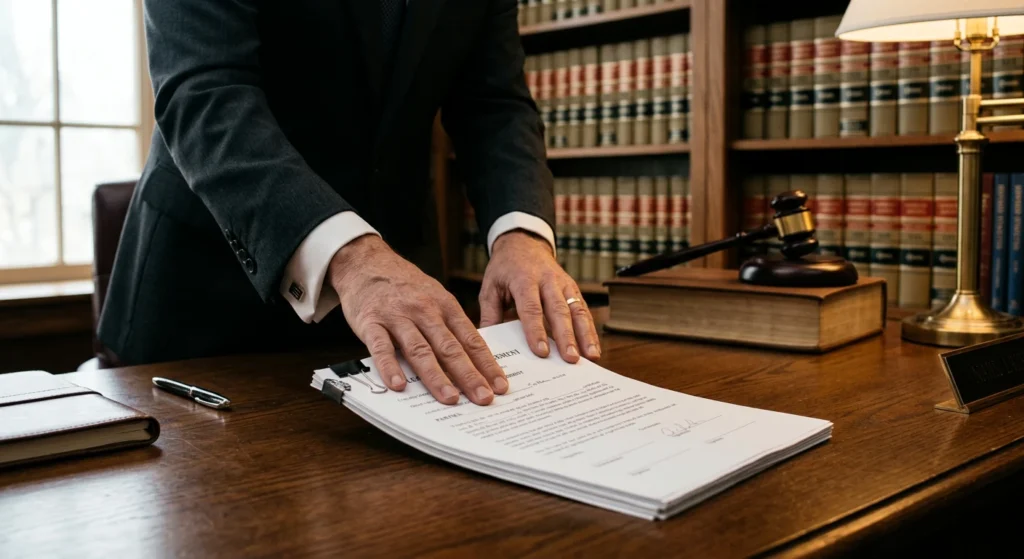
The Myth of the Infallible Police Report
Many injured cyclists assume that if the police report places them at fault, their case is entirely hopeless. This is a dangerous legal misconception.
In the vast majority of personal injury cases, police reports are considered “hearsay” and are generally inadmissible as evidence in a civil trial. The responding officer did not actually witness the accident; they arrived after the fact to clean up the scene and take notes.
Why Police Officers Get Bicycle Accidents Wrong
Officers are highly trained in criminal law, but few are certified accident reconstruction specialists. When a car hits a cyclist, police often get the narrative entirely wrong for several reasons:
- The One-Sided Story: When the police arrive, the cyclist is usually incapacitated or already in an ambulance. The officer only hears the uninjured, panicking driver’s version of events. Naturally, the driver lies to save themselves.
- Anti-Cyclist Bias: Unfortunately, systemic biases exist. Some officers inherently view cyclists as “nuisances” to vehicular traffic, leading to skewed reports that blame the victim.
- Misunderstanding of Traffic Laws: Cycling laws are nuanced. An officer might mistakenly believe a cyclist was riding too far into the lane, failing to understand that cyclists are legally entitled to take the full lane to avoid hazards.
Determining Liability and Proving Driver Negligence
To secure compensation, your legal team must prove that the driver was legally negligent, regardless of what the crash report says. This requires establishing four foundational pillars: Duty, Breach, Causation, and Damages.
Your attorney will conduct an independent investigation to gather undeniable evidence of the driver’s breach of duty.
Securing Independent Evidence
If the report is against us, we simply bypass it. We build a bulletproof case by relying on hard, objective evidence:
- Surveillance and Dashcam Footage: We immediately canvass the scene for commercial CCTV cameras, residential Ring doorbells, and municipal traffic cams before the footage is overwritten.
- Independent Eyewitnesses: The police often fail to interview bystanders. A seasoned investigator will track down witnesses who actually saw the driver swerve or run the red light.
- Accident Reconstruction: For catastrophic injuries, we hire forensic engineers. They analyze skid marks, vehicle damage, and bicycle debris fields to scientifically prove the vehicle’s speed and point of impact.
- Cell Phone Records: Was the driver texting? We can subpoena their mobile phone carrier data to prove they were distracted at the exact moment of impact.
Real-World Hypothetical: The “Right Hook”
Imagine you are cycling in a designated bike lane. A driver passes you on the left, then immediately makes a sharp right turn, cutting you off and causing a collision.
The police report claims you “failed to yield to turning traffic.” However, CCTV footage reveals the driver neglected to use a turn signal and illegally crossed the solid white line of the bike lane. The video completely supersedes the officer’s flawed opinion, placing 100% of the liability onto the driver.
Understanding Comparative and Contributory Negligence
What happens if the driver was reckless, but you also made a minor mistake—like riding without a legally required reflector?
Your ability to recover damages depends heavily on your jurisdiction’s negligence laws:
- Pure Comparative Negligence: You can recover damages even if you are 99% at fault. However, your compensation is reduced by your percentage of blame. If you are awarded $100,000 but found 20% at fault, you take home $80,000.
- Modified Comparative Negligence: You can only recover compensation if your fault falls below a certain threshold (typically 50% or 51%). If you are found to be more responsible than the driver, you get nothing.
- Contributory Negligence: This is the harshest rule, active in only a few jurisdictions. If you are found even 1% at fault for the accident, you are completely barred from recovering any compensation.
A skilled attorney knows how to minimize your percentage of fault to protect your financial recovery.
Navigating Aggressive Insurance Company Tactics
The moment an insurance adjuster sees a police report blaming the cyclist, they go on the offensive. Remember: The insurance company is not your friend. Their sole objective is to protect their profit margins by denying your claim.
Be on high alert for these predatory tactics:
1. The Pre-Emptive Denial
The adjuster will send a formal letter denying liability based exclusively on the police report. This is an intimidation tactic designed to make you give up and walk away. Do not let them bully you. A lawyer will respond with a comprehensive demand letter backed by independent evidence.
2. The Demand for a Recorded Statement
The adjuster will call you, acting friendly and sympathetic, asking for a “quick recorded statement” to clear things up. Never give a recorded statement without an attorney present. They are trained to ask misleading questions designed to make you accidentally admit fault or downplay your injuries.
3. The Lowball Settlement Offer
If they realize their driver is actually at fault despite the report, they will suddenly offer you a fast, nominal settlement (e.g., $3,000 to cover your immediate ER bill). If you accept this and sign the release, you forfeit your right to ever sue them again—even if you discover you need a $50,000 surgery next month.
Calculating Your Damages: Economic and Non-Economic
A serious bicycle accident can alter the trajectory of your life. Your settlement must reflect the true, comprehensive cost of the crash. We categorize these losses into two buckets.
Economic Damages (The Hard Numbers)
These are your tangible, out-of-pocket financial losses. They are easily quantifiable through receipts, bills, and expert testimony.
- Past and Future Medical Expenses: ER visits, surgeries, physical therapy, prescription medications, and any long-term rehabilitative care you may require.
- Lost Wages and Earning Capacity: Compensation for the time you missed from work. If your injuries permanently prevent you from returning to your chosen profession, you are entitled to damages for lost future earning potential.
- Property Damage: The full replacement value of your bicycle, helmet, GPS computer, and any torn clothing.
Non-Economic Damages (The Human Cost)
These damages compensate you for the invisible, psychological tolls of the accident. Though harder to calculate, they often represent the largest portion of a settlement in catastrophic injury cases.
- Pain and Suffering: Compensation for the physical agony you endured during the crash and throughout your recovery process.
- Emotional Distress and PTSD: Cyclists often suffer severe trauma, anxiety, and a paralyzing fear of getting back on the road.
- Loss of Enjoyment of Life: If your injuries prevent you from participating in hobbies, sports, or picking up your children, you deserve compensation for that profound loss.
The Step-by-Step Claims Process
When the police report is weaponized against you, the claims process becomes an active war zone. Here is how your legal team will navigate the battlefield:
- Immediate Investigation: We dispatch investigators to preserve the scene, gather video evidence, and secure witness affidavits before memories fade.
- Medical Stabilization: Your only job is to attend your doctor’s appointments and follow their treatment plan strictly to establish a clear medical record.
- The Demand Package: Once you reach Maximum Medical Improvement (MMI), we present a massive portfolio of evidence, medical records, and legal arguments to the insurance company, completely overriding the police report.
- Fierce Negotiation: We engage in aggressive settlement negotiations. If the insurer refuses to acknowledge their driver’s clear liability, we proceed to the final step.
- Litigation and Discovery: We file a formal lawsuit. During the “discovery” phase, we depose the at-fault driver under oath. This is often where their story falls apart, forcing the insurance company to finally offer a fair settlement.
Don’t Let the Clock Run Out: The Statute of Limitations
Every state and country has a strict legal deadline, known as the Statute of Limitations, for filing a personal injury lawsuit.
In many jurisdictions, you have between two to three years from the date of the accident to file your claim. However, if you were struck by a government-owned vehicle (like a city bus or municipal garbage truck), that deadline can be aggressively shortened to just a few months.
If you miss this deadline by even a single day, your case is dead forever, and you will receive zero compensation. Time is your most valuable asset—do not waste it.
Frequently Asked Questions (FAQs)
Can a police report be changed or amended after a bicycle accident?
Yes, but it is incredibly difficult. You or your attorney must contact the investigating officer and provide compelling, newly discovered factual evidence (like clear video footage or an undiscovered witness) to convince them to file a supplemental report correcting the narrative.
Is a police report admissible in a civil personal injury trial?
Generally, no. Because the police officer did not witness the crash firsthand, the narrative in the report is considered “hearsay.” The officer can be called to testify about what they personally observed at the scene (like the position of the vehicles), but their opinion on who caused the accident is rarely admissible.
What if there were no witnesses to my bicycle accident?
Do not panic. A skilled attorney can still prove fault using circumstantial and forensic evidence. This includes analyzing the damage to your bike, the location of your injuries, skid marks, debris patterns, and utilizing expert accident reconstructionists to prove the physics of the crash.
How much does a bicycle accident lawyer cost?
Elite personal injury attorneys operate on a contingency fee basis. This means you pay absolutely zero upfront costs, and the attorney charges no hourly fees. The lawyer only gets paid a percentage of the final settlement or verdict if they successfully win your case. If you lose, you owe them nothing.
Should I talk to the driver’s insurance adjuster if they call me?
No. You are under no legal obligation to speak with the at-fault driver’s insurance company. Adjusters are trained interrogators who will use your words against you. Politely decline to answer their questions and direct them to speak exclusively with your retained legal counsel.
Conclusion: Take Back Your Power
A police report that wrongly blames you for a bicycle collision feels like a devastating betrayal. It is natural to feel overwhelmed, defeated, and anxious about your physical and financial future.
But you must not let an inaccurate piece of paper dictate the rest of your life.
Insurance companies rely on your fear and exhaustion. They hope you will look at that police report and simply walk away from the compensation you desperately need. By retaining aggressive, deeply experienced legal counsel, you shift the balance of power entirely in your favor.
Your immediate next steps are critical. Preserve any evidence you currently have, do not speak to the driver’s insurance company, and seek out a free, confidential case evaluation with a qualified personal injury attorney today. They will evaluate the facts, challenge the report, and fight relentlessly to protect your future.
Legal Disclaimer: The information provided in this article is for general informational and educational purposes only and does not constitute legal advice. Reading this article does not establish an attorney-client relationship. Personal injury laws, statutes of limitations, and comparative negligence rules vary wildly by state, country, and jurisdiction. You should not act or refrain from acting based on this content. Always consult with a licensed, qualified attorney in your specific jurisdiction regarding your unique legal situation before making any legal decisions.