The Ultimate Guide to Maximizing Your Bicycle Dooring Accident Settlement
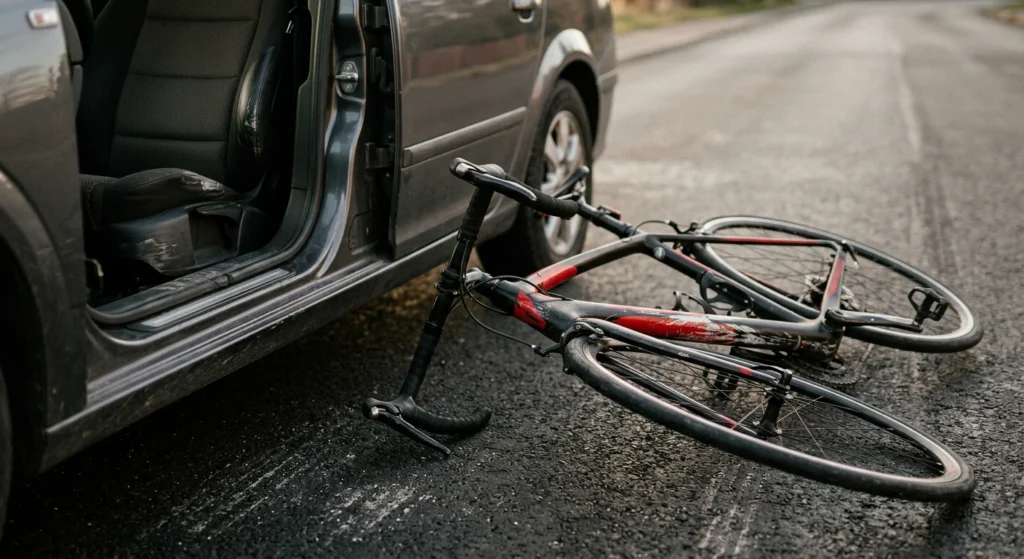
If you are reading this, you or a loved one has likely experienced one of the most terrifying events a cyclist can face: a “dooring” accident. One moment you are riding legally and safely in the bike lane or along the shoulder.
The next moment, a car door is thrown open directly in your path. The impact is sudden, violent, and entirely unavoidable. The physical trauma of being thrown over your handlebars or into active traffic is devastating.
However, the physical pain is often just the beginning. Soon, you are facing mounting medical bills, weeks of missed work, and the overwhelming stress of a damaged or destroyed bicycle. To make matters worse, the driver’s insurance company is already calling, subtly trying to shift the blame onto you.
They might suggest you were riding too close to parked cars or riding too fast. You feel victimized twice: first by the negligent driver, and second by a system designed to protect corporate profits over injured victims.
This guide is your roadmap to fighting back. We will break down exactly how a bicycle dooring accident settlement works, how to prove the driver’s negligence, and how to protect your legal rights so you can secure the maximum compensation you deserve.

The Anatomy of a Dooring Accident
Dooring accidents are not minor scrapes. They are high-impact collisions that frequently result in catastrophic injuries.
When a cyclist strikes a suddenly opened door, all of their forward momentum is abruptly halted by a solid, unyielding object. The sharp edges of a car door can cause deep lacerations, while the blunt force impact frequently leads to severe orthopedic injuries.
Common injuries sustained in dooring crashes include fractured collarbones (clavicles), shattered wrists, traumatic brain injuries (TBIs), and severe spinal cord damage.
Furthermore, a secondary impact often occurs. The cyclist is either thrown over the door onto the hard pavement or deflected directly into the path of moving traffic, leading to potentially fatal secondary collisions.
Why Dooring is Rarely the Cyclist’s Fault
Insurance adjusters will quickly point to “The Door Zone”—the area roughly three to five feet adjacent to parked cars. They will argue that you should have anticipated the door opening.
This is a disingenuous legal defense. In almost every jurisdiction, the law explicitly places the burden of safety on the person opening the car door.
Drivers and passengers have a strict legal duty to check their mirrors and blind spots before opening their doors into a traffic lane or bicycle lane. Opening a door when it is not safe to do so is a clear violation of traffic laws and constitutes negligence.
Determining Liability and Proving Negligence
To win a bicycle dooring accident settlement, you must prove that the other party was negligent. This requires establishing four distinct legal elements.
First, you must prove Duty of Care. All drivers and passengers owe a duty to other road users, including cyclists, to act reasonably and safely.
Second, you must prove a Breach of Duty. By failing to look for oncoming cyclists and opening a door into moving traffic, the driver or passenger breached their legal duty of care.
Third, you must prove Causation. You need to demonstrate that this specific breach of duty was the direct cause of your crash. It was the open door, not a pothole or a mechanical failure on your bike, that caused the accident.
Finally, you must prove Damages. You must have suffered legally recognized harm, such as physical injuries, medical bills, and property damage.
Gathering Ironclad Evidence
Proving these elements requires strong, irrefutable evidence. Do not rely on the driver’s initial apology at the scene; stories change rapidly once insurance companies get involved.
Police Reports: Always call law enforcement to the scene. A formal police report documenting that the driver opened their door into your path is a critical piece of evidence. Ensure the officer cites the driver for a dooring violation.
Eyewitness Testimony: Independent witnesses are invaluable. Collect names and contact information from pedestrians, other cyclists, or drivers who saw the door open suddenly.
Video Evidence: Dashcams from passing vehicles, helmet cameras (GoPros), and nearby commercial CCTV cameras are the golden standard of evidence. Your legal team must act quickly to preserve this footage before it is overwritten.
The Rideshare Complexity: Uber and Lyft Doorings
Dooring accidents have skyrocketed with the rise of rideshare services. What happens when a careless passenger opens a door into your path?
Liability here can become incredibly complex. Is the passenger liable? Is the Uber/Lyft driver liable for stopping in an unsafe location (like a bike lane) to discharge the passenger?
In these cases, your attorney may need to pursue claims against the passenger’s personal liability insurance, the rideshare driver’s auto policy, and the massive corporate insurance policies provided by the rideshare companies.
Calculating Economic & Non-Economic Damages
A fair bicycle dooring accident settlement must account for every single way this crash has impacted your life. The law divides these impacts into two distinct categories: economic damages and non-economic damages.
Economic Damages: Your Financial Losses
Economic damages are your verifiable, out-of-pocket financial losses. These are tangible costs that can be calculated using receipts, invoices, and financial projections.
Medical Expenses: This is the foundation of your claim. It includes emergency room visits, surgeries, hospital stays, physical therapy, prescription medications, and mobility aids.
Future Medical Care: For severe injuries, you must account for future treatments. If you require further surgeries, long-term rehabilitation, or permanent home modifications, these projected costs must be included in your settlement demand.
Lost Wages and Earning Capacity: If your injuries prevent you from working, you are entitled to recover the income you lost. If a catastrophic injury permanently limits your ability to work in your chosen profession, you can claim a loss of future earning capacity.
Property Damage: High-end road bicycles, carbon fiber frames, customized components, specialized riding kits, and helmets are incredibly expensive. You are entitled to the replacement value of your destroyed gear.
Non-Economic Damages: Your Human Losses
Non-economic damages compensate you for the subjective, intangible impacts of the crash. While harder to calculate, these often make up the largest portion of a substantial settlement.
Pain and Suffering: This compensates you for the physical agony you endured during the crash, the painful recovery process, and any chronic pain you are left with.
Emotional Distress and PTSD: Being hit by a car is profoundly traumatizing. Many injured cyclists develop severe anxiety, depression, or Post-Traumatic Stress Disorder, making them terrified to ever ride a bicycle again.
Loss of Enjoyment of Life: If you were an avid cyclist who spent your weekends doing century rides, and now you cannot ride without agonizing knee pain, you have lost a significant source of joy in your life. The law recognizes and compensates for this loss.
Navigating Insurance Company Tactics
The insurance adjuster assigned to your case is a highly trained negotiator. Their primary objective is to protect their company’s bottom line by paying you as little as possible.
You must be prepared for their aggressive, and often deceptive, tactics.
Tactic 1: The Premature Lowball Offer
Within days of the accident, the adjuster may call you, acting overly friendly and empathetic. They will offer a quick settlement to “help you out with those immediate medical bills.”
Never accept this offer. They are trying to get you to sign away your legal rights before you fully understand the extent of your injuries. Once you sign a release, you can never go back for more money, even if you discover you need surgery months later.
Tactic 2: Blaming the Victim (Comparative Negligence)
Insurance companies love to argue “contributory” or “comparative” negligence. They will try to find any reason to assign a percentage of the blame to you.
They might argue you lacked proper reflective gear, your lights were not bright enough, or you were riding erratically. By shifting even 20% of the blame onto you, they can significantly reduce the settlement payout. A skilled attorney will anticipate these arguments and shut them down with hard evidence.
Tactic 3: The Blanket Medical Authorization Request
The adjuster will ask you to sign a medical authorization form, claiming they need it to verify your accident-related injuries.
Do not sign this. These forms are often “blanket” authorizations that give the insurer access to your entire medical history. They will comb through decades of records looking for “pre-existing conditions” they can blame for your current pain, rather than the dooring accident.
The Step-by-Step Claims Process & Statute of Limitations
Securing a fair settlement is a marathon, not a sprint. Understanding the timeline will help you manage your expectations.
The process begins with reaching maximum medical improvement (MMI). Your attorney will generally not issue a settlement demand until your doctors confirm you have healed as much as you ever will, ensuring all future medical costs are known.
Once MMI is reached, your attorney drafts a comprehensive Demand Letter. This document details the liability arguments, outlines your injuries, tallies your damages, and formally demands a specific financial settlement.
This triggers the negotiation phase. If the insurance company refuses to offer a fair settlement, your attorney will file a formal lawsuit, moving the case into litigation and potentially toward a jury trial.
The Statute of Limitations: A Hard Deadline
You do not have unlimited time to file a claim. Every jurisdiction has a Statute of Limitations—a strict legal deadline by which a lawsuit must be filed.
In many states and countries, this is typically between two and three years from the date of the accident. However, if you were doored by a government vehicle (like a city bus or a municipal utility truck), this deadline can be dramatically shorter, sometimes as little as six months.
If you miss this deadline, your case is legally barred forever, regardless of how severe your injuries are.
FAQs
Who is at fault if a passenger opens the door, not the driver?
In most cases, the individual who opened the door is the primarily negligent party. If a passenger opens a door into a bike lane, you would file a claim against the passenger’s liability insurance. However, the driver may also share liability if they parked illegally or instructed the passenger to exit in an unsafe location.
What is the average bicycle dooring accident settlement?
There is no “average” settlement because every case is unique. Settlements can range from thousands of dollars for minor soft-tissue injuries to multi-million dollar verdicts for traumatic brain injuries or paralysis. The value relies heavily on your total medical bills, lost wages, and the severity of your permanent impairments.
Can I still get a settlement if I wasn’t wearing a helmet?
Yes. While insurance companies will try to use the lack of a helmet against you to reduce damages (specifically if you suffered a head injury), it does not absolve the driver of liability for opening the door illegally. If your injuries were to your legs or torso, the helmet argument is completely irrelevant.
How long does a dooring settlement take?
Simple cases with clear liability and minor injuries can settle in a few months. However, if your injuries are severe, requiring long-term treatment, or if the insurance company fiercely disputes liability, the process can take anywhere from a year to several years, especially if litigation is required.
Should I talk to the driver’s insurance company?
Absolutely not. You are under no legal obligation to provide a recorded statement to the at-fault driver’s insurance company. Anything you say can and will be twisted to minimize your claim. Always direct their calls to your legal representative.
Conclusion & Next Steps
Surviving a bicycle dooring accident is a traumatic experience that can upend your physical health, your emotional well-being, and your financial security. You do not have to fight the insurance companies alone.
The system is engineered to protect negligent drivers and corporate insurers, but with the right legal strategy, you can level the playing field. Remember, never accept the first settlement offer, never give a recorded statement to the opposing insurer, and always prioritize your medical recovery above all else.
Take Action Now: If you or a loved one has been injured in a dooring crash, time is of the essence. Crucial evidence disappears quickly. Contact a dedicated personal injury attorney today for a free, confidential case evaluation to protect your rights and begin your journey toward maximum financial recovery.
Legal Disclaimer: The information provided in this article is for educational and informational purposes only and does not constitute legal or medical advice. Reading this article does not establish an attorney-client relationship. Personal injury laws, statutes of limitations, and traffic regulations vary significantly by jurisdiction. You should always consult with a licensed, qualified attorney in your area regarding the specific facts of your case before making any legal decisions or speaking with an insurance company.